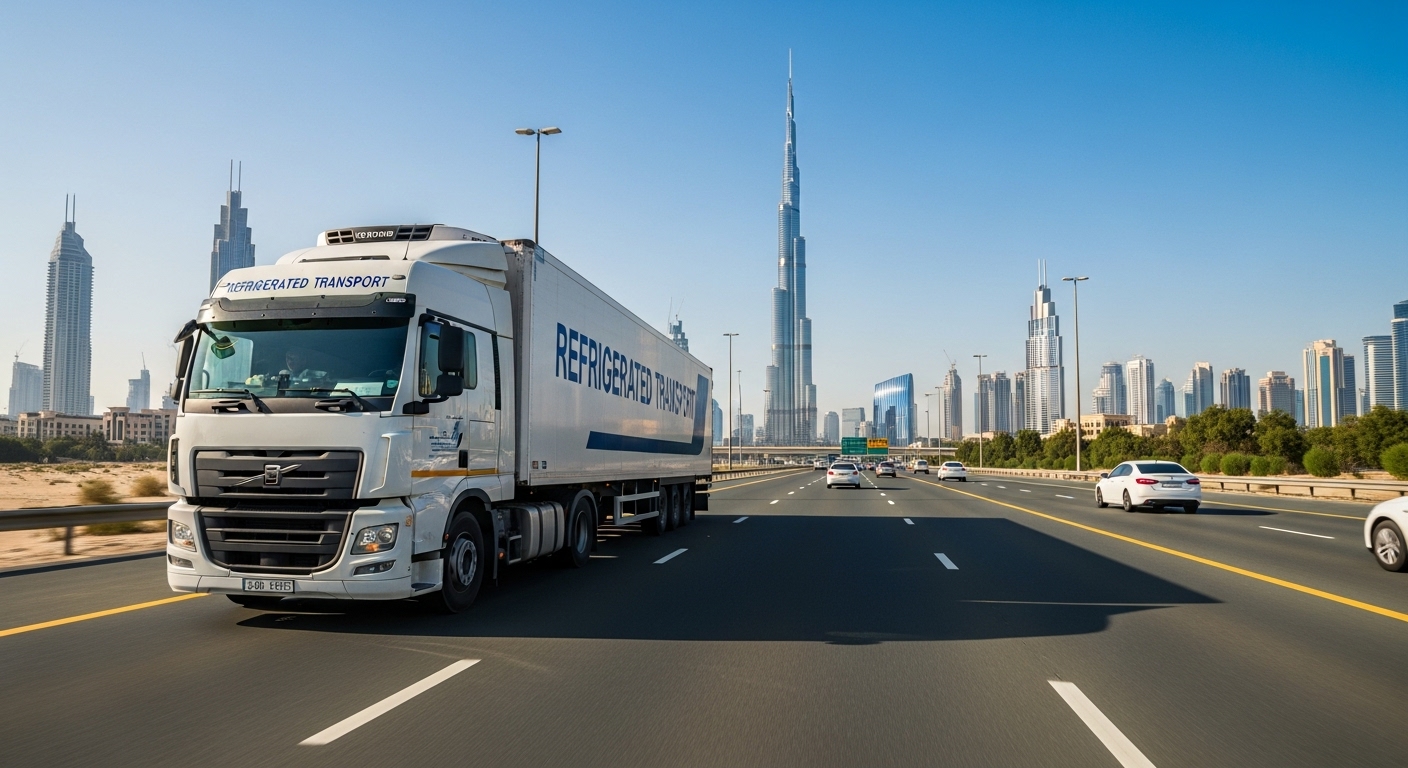
Refrigerated transport is the backbone of the UAE’s perishable goods industry — from dairy and seafood to pharmaceuticals and florals. But when long-distance journeys come into play, the risks multiply. Spoilage during extended hauls can lead to massive financial losses, customer dissatisfaction, and worse — reputational damage.
Whether you’re moving frozen meats from Abu Dhabi to Ras Al Khaimah or shipping medical supplies between Dubai and Fujairah, maintaining consistent temperatures and product integrity is mission-critical. Here’s how businesses can significantly reduce spoilage during long-distance refrigerated transport across the UAE.
- Choose the Right Vehicle for the Job
Not all refrigerated vehicles are created equal. The wrong van or trailer can spell disaster before your goods even hit the road.
Tip: Match your cargo with the correct temperature-controlled vehicle. For instance:
- Chiller vans (0°C to +5°C) for dairy, fresh produce
- Freezer trucks (-18°C or lower) for frozen goods
- Pharma-grade reefers with backup systems for sensitive medical items
Pro Tip: Ask your logistics provider about multi-temp vehicles if you’re transporting goods with different cooling requirements on the same trip.
- Pre-Cool the Vehicle Before Loading
Starting the trip with a warm cargo hold is one of the most overlooked mistakes.
Why it matters: Placing chilled or frozen goods into an uncooled vehicle forces the refrigeration unit to overwork, causing temperature spikes and increasing spoilage risk — especially in UAE’s 40°C+ climate.
Best Practice: Always pre-cool the vehicle to the desired temperature before loading begins. This simple step can drastically stabilize in-transit conditions.
- Proper Packaging = Longer Product Life
Refrigerated transport isn’t just about keeping the air cold — it’s also about preserving the micro-environment around each item.
Smart packaging tips:
- Use insulated crates or containers for added thermal protection
- Avoid overpacking; allow for airflow between packages
- Use temperature-sensitive labels or sensors for sensitive cargo
In the UAE, humidity can be just as damaging as heat. Ensure packaging protects against condensation and moisture buildup during long hauls.
- Temperature Monitoring Should Be Real-Time — Not Guesswork
Imagine discovering temperature fluctuations after delivery. At that point, it’s already too late.
Today’s refrigerated transport must include real-time temperature tracking. At Afridi Express Transport, for example, we use GPS-enabled systems that monitor and report temperature 24/7, allowing drivers and dispatchers to act instantly if conditions change.
Bonus: Real-time data builds client trust, especially in industries like food distribution and pharma where compliance matters.
Want to see how live monitoring works? Request a fleet demo from our team and explore your options.
- Optimize Routes to Minimize Transit Time
Even the best cold chain tech can’t undo the damage caused by long, inefficient routes.
In the UAE, choosing routes with:
- Less traffic congestion (especially around Dubai and Sharjah during peak hours)
- Fewer urban stops or unnecessary detours
- Proximity to cold storage hubs or distribution centers
…can make a huge difference in delivery time — and in product quality.
Solution: Use smart routing software that accounts for time, traffic, and cargo type. And always have backup route plans in case of road closures or emergencies.
- Train Your Loading & Driving Crew
Spoilage often starts with human error — incorrect loading, door openings during transit, or inconsistent checks.
Every crew member involved in long-distance refrigerated transport should be trained in:
- Cargo handling for sensitive items
- Loading zone temperature control
- Emergency protocols for unit failure or delays
At Afridi Express, our drivers receive specialized cold chain training to reduce risk and deliver safely — even across long-haul routes within the UAE.
- Run a Trial Run (If You’re New to Long-Distance Routes)
If you’re shipping a high-value load or trying a new route between emirates, test it first.
A small-volume trial shipment lets you:
- Verify actual vs. expected temperatures
- Evaluate timing and delivery conditions
- Identify weak points in loading, tracking, or route planning
Why it matters: A test run helps prevent large-scale losses, especially for new products, clients, or delivery points.
Spoilage Is Preventable — If You Plan Ahead
Long-distance refrigerated transport doesn’t have to be risky. With the right equipment, people, and process, you can maintain cold chain integrity from pick-up to delivery — even across the hottest stretches of the UAE.
At Afridi Express Transport, we specialize in temperature-controlled logistics across all seven emirates, offering:
- Pre-cooled & maintained chiller vans and freezer trucks
- GPS and real-time temperature monitoring
- Experienced cold chain-certified drivers
- Flexible options: trip-based, contract, or emergency dispatch
Need to move perishable cargo long-distance without risk?
👉 Get a fast quote or speak to a cold chain specialist today.
Final Takeaway
Reducing spoilage in long-distance refrigerated transport is not just about cold air — it’s about smart planning, proactive monitoring, and professional handling.
Businesses that invest in a well-managed cold chain can boost shelf life, customer satisfaction, and long-term profits.
Don’t wait for a spoilage incident to learn the hard way — build your resilient cold chain strategy today.